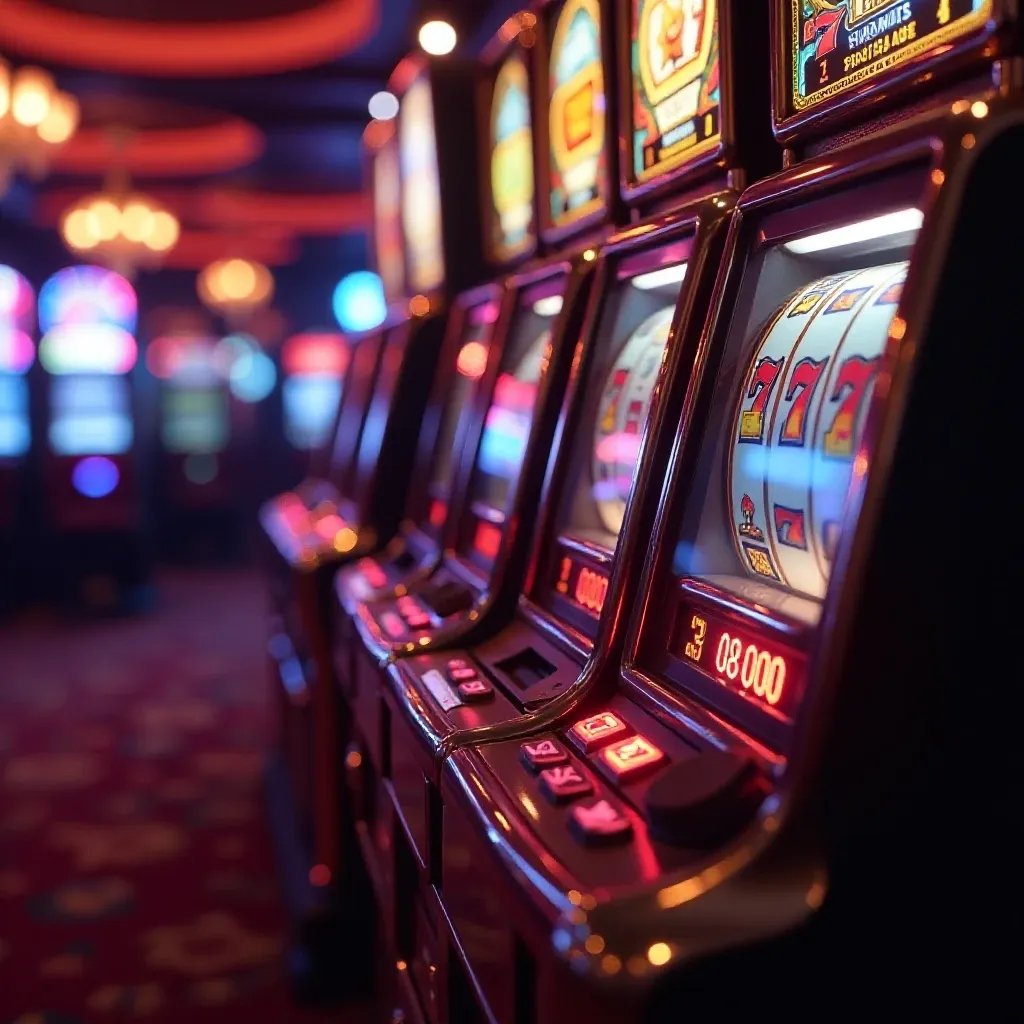
Ever felt that thrill, that little spark of certainty, as you watched the reels spin on a slot machine? Maybe you noticed a sequence, a near-miss pattern that screamed, “Next time! Next time it’s gotta hit!” The allure of predicting a win, of cracking the code of the casino, is a powerful draw for anyone who’s ever pulled that lever or tapped that screen.
But here’s the truth, delivered straight from someone who’s spent years studying the inner workings of gambling and game design: slot machines are meticulously engineered for randomness. They are not easily tricked. This isn’t about raining on anyone’s parade; it’s about understanding the reality of how these games operate. We’re going to explore the myth of patterns, delve into the technology that drives slot machines, and equip you with the knowledge to approach gambling with realistic expectations. Forget the lucky charms and superstitions; it’s time to get real about randomness.
Understanding the Basics of Slot Machines
Slot machines, those glittering titans of the casino floor, seem simple on the surface: spin the reels and hope for a winning combination. But beneath the dazzling lights and enticing sounds lies a complex system driven by sophisticated technology. Understanding this technology, particularly the Random Number Generator (RNG), is key to appreciating the nature of chance involved. At its heart, a slot machine is a computer program designed to generate random outcomes, ensuring fairness and unpredictability. A crucial specification of slot machines are payout percentages and volatility, which dictate the player experience.
Random Number Generators (RNGs)
The Random Number Generator (RNG) is the brain of the slot machine. It’s a microchip that constantly generates numbers, even when the machine isn’t in use. These numbers aren’t truly random in the philosophical sense; they are produced by complex algorithms. The process starts with a “seed number,” which is then fed into the algorithm to produce a sequence of seemingly random numbers. Because the algorithm is deterministic, the numbers are technically “pseudorandom,” but statistically, they exhibit randomness. This means that over a vast number of spins, the outcomes will conform to the programmed probabilities, guaranteeing fairness over time.
Payout Percentages and Volatility
Two important concepts in understanding slot machines: payout percentage and volatility. The payout percentage, also known as RTP (Return to Player), is the amount of money a slot machine is programmed to return to players over time. For example, a slot with a 95% RTP will theoretically pay back $95 for every $100 wagered. Volatility, on the other hand, refers to the risk associated with playing a particular slot. High volatility slots offer the potential for large payouts, but wins are less frequent. Low volatility slots offer more frequent, smaller wins. Different players prefer different volatilities depending on their risk tolerance and playing style.
The Illusion of Patterns
The quest to crack the code of slot machines leads many down a path paved with perceived patterns. The core question is whether these patterns are real or simply a trick of the mind. The truth is, the idea that slot machine patterns can be predicted is largely an illusion fueled by cognitive biases like the gambler’s fallacy. This fallacy makes people believe that if a slot machine hasn’t paid out for a while, it’s “due” for a win. This is completely false, as each spin is an independent event with the same probability of winning or losing as the last.
Other cognitive biases also play a role. For example, people might remember instances where they switched machines after a losing streak and then saw the next person hit a jackpot, reinforcing their belief that the original machine was about to pay out. However, in the grand scheme of things, these instances are statistically irrelevant. It’s easy to fall into the trap of thinking that a machine that’s been “cold” is about to get “hot,” but the reality is that the machine has no memory of past spins. The odds are always the same.
Why We See What We Want To See
Confirmation bias is a powerful force in perpetuating the illusion of patterns. People naturally gravitate towards information that confirms their existing beliefs. So, if someone believes that a certain slot machine tends to pay out at a specific time of day, they’re more likely to notice and remember instances that support this belief, while conveniently forgetting the times when it doesn’t. This selective memory, coupled with anecdotal evidence, creates a false sense of predictability where none exists. The human brain is wired to seek patterns, but in the realm of truly random events like slot machine spins, this can lead to faulty conclusions.
Short-Term vs. Long-Term Results
A short-term winning streak on a slot machine might seem like a pattern, but it’s crucial to consider the difference between short-term and long-term results. Even if a pattern appears over a few spins, it’s unlikely to hold true over a larger sample size. Statistical significance requires a vast number of trials. A few lucky spins are simply a result of chance in the short term. In the long term, the machine will always revert to its programmed payout percentage. Therefore, relying on perceived patterns to predict outcomes is a losing strategy. Probability dictates that randomness will always prevail in the end.
Legitimate Strategies vs. Gambling Fallacies
Effective Money Management Techniques
Smart money management is the cornerstone of responsible and potentially more enjoyable approach to gambling. Before even placing a bet, establish a dedicated bankroll – an amount of money you’re completely comfortable losing. Think of it as entertainment budget, not an investment. Next, set clear win and loss limits. A “stop-loss” strategy dictates when to quit if you reach a predetermined loss threshold, preventing you from chasing losses and depleting your bankroll. Conversely, a “take-profit” strategy defines a winning point at which you’ll walk away, securing your gains and avoiding the temptation to gamble it all back. These aren’t guaranteed paths to riches, but they provide structure and discipline, mitigating the emotional rollercoaster that can lead to reckless decisions.
Debunking Common Gambling Superstitions
The world of gambling is rife with superstitions, from lucky charms and rituals to beliefs about “hot streaks” and “due” outcomes. Many gamblers firmly believe that these rituals or items can influence the results of a game, wearing the same shirt, blowing on dice, or always sitting in a certain seat. These beliefs are psychological crutches, offering a sense of control in a realm of pure chance. It’s important to remember that each event, each roll of the dice, each spin of the wheel, is independent. Past outcomes have absolutely no bearing on future probabilities. Relying on superstitions can lead to irrational betting patterns and a distorted perception of risk, potentially overshadowing well-reasoned strategies and leading to regrettable losses. Embrace the reality of chance, not the illusion of control.
Responsible Gambling: Play Smart, Stay Safe
Gambling can be a fun and exciting form of entertainment, but it’s crucial to approach it responsibly. For some, what starts as a harmless pastime can unfortunately lead to problem gambling and addiction. Understanding the risks and practicing responsible gambling habits are essential for maintaining control and preventing negative consequences.
One of the most important aspects of responsible gambling is setting limits. Before you start, decide how much time and money you’re willing to spend and stick to those limits. Avoid chasing losses, as this can quickly lead to increased spending and financial difficulties. Remember that gambling should be viewed as entertainment, not a source of income.
If you’re concerned about your gambling habits or those of someone you know, there are resources available to help. Many organizations offer confidential support and guidance for problem gambling. Consider exploring self-exclusion programs, which allow you to voluntarily ban yourself from gambling venues and online platforms.
Signs of Problem Gambling:
- Gambling with increasing amounts of money to achieve the desired excitement.
- Feeling restless or irritable when attempting to cut down or stop gambling.
- Making repeated unsuccessful efforts to control, cut back, or stop gambling.
- Being preoccupied with gambling.
- Gambling when feeling distressed.
- Lying to conceal the extent of involvement with gambling.
- Jeopardizing or losing a significant relationship, job, or educational/career opportunity because of gambling.
- Relying on others to relieve desperate financial situations caused by gambling.
Remember, responsible gambling is about staying in control and making informed decisions. If you think that you or someone you know may have a problem with gambling, seek help.

The Future of Slot Machines and Pattern Recognition
The gambling industry stands on the cusp of a technological revolution, with artificial intelligence (AI) poised to reshape the landscape of slot machines as we know it. One of the most intriguing possibilities lies in the application of AI to pattern recognition within these games. Current slot machines rely on random number generators (RNGs) to ensure fairness and unpredictability. However, the integration of AI could introduce a new layer of complexity, potentially creating software to craft patterns designed to enhance user engagement.
Imagine slot machines that subtly adapt to a player’s betting behavior, offering tailored experiences based on observed patterns. Predictive algorithms, fueled by machine learning, could analyze vast amounts of data to identify player preferences, risk tolerance, and even emotional states. This information could then be used to dynamically adjust the game’s volatility, bonus frequency, and visual elements, creating a personalized and potentially more addictive experience.
However, the use of AI in slot machines also raises ethical concerns. Critics worry about the potential for these technologies to exploit vulnerable players, leading to increased gambling addiction and financial hardship. The line between personalized entertainment and manipulative tactics could become increasingly blurred, demanding careful regulation and oversight.
Furthermore, the inherent randomness of slot machines, a cornerstone of their fairness, could be compromised by AI-driven pattern creation. While AI could enhance the entertainment value of slot machines, it’s crucial to strike a balance that protects players and preserves the integrity of the games. The future of gambling hinges on responsible innovation and a commitment to player well-being. Probability must remain just that: probability, not a pre-determined outcome orchestrated by algorithms.
Conclusion
In conclusion, while the allure of uncovering patterns in slot machines is strong, it’s crucial to remember their core function: randomness. Slot machines are designed to be unpredictable, relying on sophisticated algorithms and random number generators to determine outcomes. Chasing patterns can lead to frustration and financial losses, as past results offer no guarantee of future success.
The expert perspective consistently emphasizes that while perceived patterns might emerge in the short term, they are ultimately products of chance within a random system. Enjoying slot machines should be about entertainment, not about trying to decode the inherent randomness.
Therefore, it’s essential to approach slot machines with a clear understanding of how they work and a commitment to responsible gambling practices. Set limits for spending and time, and never gamble more than you can afford to lose. Remember, gambling should be a source of entertainment, not a financial strategy. Play responsibly and enjoy the experience for what it is: a game of chance.